Walk into almost any busy 3D studio and sooner or later you’ll hear the same debate flare up: is this something we should model, or should we sculpt it? At first glance the two seem like interchangeable terms, just different flavors of the same thing.
But once you’ve spent time in production, you realize the choice isn’t cosmetic. It can completely reshape how long a project takes, how much it costs, and even how convincing the final result looks.
Picture two teams side by side. One is building a racing game’s futuristic city — neat lines, modular buildings, vehicles that need to animate smoothly. The other is designing a dragon, with overlapping scales, scars, and leathery wings.
The first team thrives on precision; the second on expression. That contrast sums up why the modeling-versus-sculpting discussion still matters so much.
[elementor-template id=”13845″]
3D Modeling Explained in Plain Language
At its core, 3D modeling is digital construction. Instead of beams and nails, you’re piecing things together with vertices, edges, and polygons. Every surface you see on screen is really just a collection of those tiny flat pieces stitched into a larger whole.
Done well, the result is lean and efficient — something a game engine or animation rig can handle without choking. Think of it as the engineering side of 3D. A machine part, a skyscraper, or even a coffee mug all need accuracy, not guesswork. Every edge sits on a coordinate system, every angle is deliberate.
Fact: The 3D models market was valued at USD 1.29 billion in 2024, with projections to expand to approximately USD 3.02 billion by 2033 (CAGR of 11.2%).
Core Principles Behind 3D Modeling
- Polygons rule the workflow. Triangles and quads form the skin of almost every 3D object.
- Topology is king. The way edges flow across a mesh determines whether a character’s elbow bends naturally or folds into a mess.
- Accuracy beats flair. Especially in technical fields like architecture or engineering, the math has to check out.
Different Types of Modeling
Modeling isn’t a one-size-fits-all process. Artists switch methods depending on what the project calls for:
- Polygonal modeling – the industry workhorse. Great for games, films, and anything needing flexibility.
- NURBS (Non-Uniform Rational B-Splines) – math-driven curves perfect for automotive or product design. That glossy car hood? Probably NURBS.
- Primitive modeling – start with a sphere, cube, or cylinder and block things out fast. Handy for roughing in shapes.
- Subdivision surface modeling – keep a simple base mesh, then subdivide for smoothness. A common technique in high-end film assets.
- High-poly modeling – when detail is everything. Often paired with sculpting later to capture the smallest surface textures.
Each technique solves a different problem. A designer prototyping sneakers doesn’t use the same workflow as someone building a medieval castle, and that flexibility is what makes modeling so versatile.
File Types That Matter in Modeling
Every pipeline has its favorite file formats:
- OBJ – simple and widely supported. Best for static meshes.
- FBX – the go-to when you need animation or rigging data to transfer.
- STL – practically the standard for 3D printing.
- 3DS – older, but still used in some architecture workflows.
Having multiple export options ensures assets can move between different tools without starting from scratch each time.
Sculpting: Creativity That Feels Like Clay
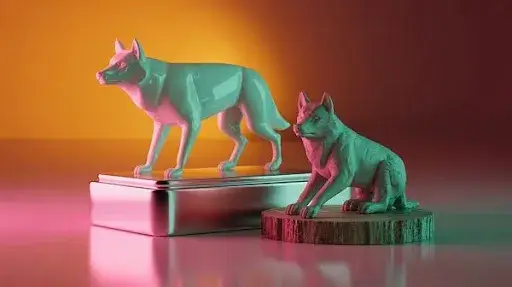
If modeling feels like engineering, sculpting feels like art class. Instead of clicking vertices and calculating edges, you grab a digital brush and push or pull surfaces as if you were kneading clay. The process is tactile, expressive, and often more fun.
Sculpting lets artists experiment without worrying about precision right away. One quick stroke can change a jawline, add a scar, or suggest folds in fabric. It’s all about form, weight, and feel rather than clean math. That’s why sculpting often attracts artists with a background in traditional drawing or sculpture.
Why Polycount Gets Out of Control
The trade-off? Sculpting produces massive meshes. It’s not unusual for a detailed character sculpt to hit millions of polygons. The detail looks incredible, but those models are unusable in most production environments.
That’s where retopology comes in — essentially rebuilding a lighter version of the mesh, then baking the sculpted details into textures (normal maps, displacement maps, etc.). Without this step, sculpted assets would clog pipelines and crash real-time engines.
Why Sculpting Works Best for Organic Designs
Some things are simply faster to sculpt. Wrinkles on a face, folds in fabric, or stretched skin across a muscle all come naturally with brushes. You can spend hours pushing vertices in a modeling package and still not get the same organic feel.
Sculpting is also a powerful tool for exploration. Concept artists use it to block in bold shapes, exaggerate proportions, or test out facial expressions before a final design is approved. It’s less rigid, more experimental.
Comparing Modeling and Sculpting
Lay the two approaches side by side and the differences become pretty obvious:
- Method: Modeling = math and structure. Sculpting = brushes and strokes.
- Workflow: Modeling builds up from clean, simple shapes. Sculpting starts with a digital clay ball.
- Purpose: Modeling rules in mechanical or hard-surface projects. Sculpting shines for lifelike, organic assets.
- Learning curve: Modeling leans technical. Sculpting often feels more natural to beginners.
- Output: Modeling gives you lightweight, animation-ready assets. Sculpting creates dense, detailed meshes that need cleanup.
- Speed: Modeling is faster for structured builds. Sculpting takes longer but delivers unmatched detail.
- Texturing: Modeling depends on UV mapping. Sculpting often folds painting tools directly into the process.
- Constraints: Modeling is bound by math. Sculpting leaves more room to play.
Pros and Cons in Practice
Modeling – Strengths
- Total control over topology.
- Essential for mechanical, architectural, or technical assets.
- Produces efficient files that run smoothly.
- Easier to tweak or reuse later.
Modeling – Weaknesses
- Awkward for organic shapes.
- Steeper technical learning curve.
- Complex characters usually still need sculpting somewhere down the pipeline.
Sculpting – Strengths
- Natural, artistic workflow.
- Great for realistic textures and small surface details.
- Quick prototyping for characters and concepts.
- Many artists simply find it more enjoyable.
Sculpting – Weaknesses
- Heavy, polygon-dense files.
- Editing fine detail can be frustrating.
- Always requires retopology before rigging.
- Not practical for hard-surface projects.
When Studios Pick One Over the Other
- Modeling wins when efficiency and structure are non-negotiable. Vehicles, props, buildings — they need clean topology and performance-friendly assets. It’s also faster for repeatable designs, making it budget-friendly.
- Sculpting takes the spotlight when emotion and realism matter. Characters, creatures, natural environments — sculpting adds the folds, pores, and asymmetries that bring them to life. It’s also the tool of choice for quick visual exploration in pre-production.
Top-rated 3D animation studios will help you decide which technique is better for your specific project.
Where 3D Modeling and Sculpting Overlap
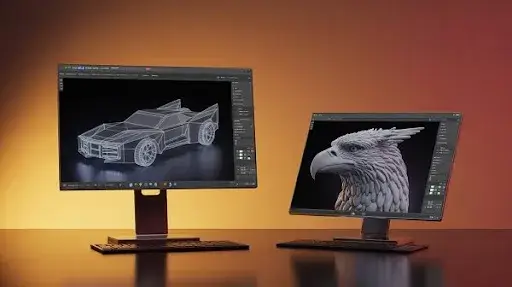
In the real world, very few projects stick with just one approach. Studios bounce back and forth constantly, letting sculpting handle the loose, expressive early stage and then passing the baton to modeling when things need to tighten up. It’s a rhythm that’s become second nature.
Take a creature design. The artist might dive into ZBrush first, scribbling in digital clay until the anatomy feels alive. Once that bulky sculpt looks right, it gets retopologized into something lighter. From there, modeling software takes over for the surgical work: UVs, rigging, polish.
Props and hard-surface items follow a different path. Armor, weapons, even cars usually bypass the messy freedom of sculpting because they demand clean geometry from the start. It’s not about picking one method over the other—it’s about knowing when to loosen up and when to stay rigid. Sculpting breathes soul into the design; modeling keeps it production-ready.
How Different Fields Use Them
Games – Game artists are always chasing polygons. Sculpting is perfect for fleshing out characters and monsters, but high-res sculpts would choke a real-time engine. Retopology and texture baking are the magic tricks here: keep the detail, lose the weight.
Film & Animation – Movies don’t have the same restrictions, so sculpting tends to shine. Creatures, villains, and protagonists almost always start there. But environments, props, and set pieces? Those lean heavily on modeling. A dragon may be sculpted down to every scale, but the castle it defends is usually modeled for precision.
Architecture & Product Design – This world has little patience for “winging it.” Clients expect millimeter accuracy. Modeling rules the roost here, though sculpting sometimes slips in for things like stylized landscaping or ergonomic curves on a product prototype.
3D Printing & Prototyping – This one is a mix. Engineers lean on models for function, while artists sculpt figures, collectibles, or toys. At the end, it all funnels into STL anyway, where the software doesn’t care if the object came from vertices or brush strokes—it just needs a watertight mesh.
Skills That Matter
Studios today don’t want one-trick ponies. They want adaptable artists.
- Modelers obsess over topology and edge flow. They’re the people making sure joints bend without tearing and that geometry is light enough for animation. Their toolset is usually Blender, Maya, or 3ds Max, and they’re expected to handle UVs and textures too.
- Sculptors come at it like painters or sculptors from the traditional world. Anatomy, gesture, subtle imperfections—that’s their language. Their playground is ZBrush or Mudbox, but the job doesn’t end there. Without retopology or baking know-how, their beautiful work risks getting stuck as an unusable, heavy mesh.
The best portfolios don’t just show off gorgeous renders. They prove the artist can cross the bridge: a detailed sculpt side by side with a clean, animation-ready model. That balance speaks louder than either alone.
Deciding Which Path to Take
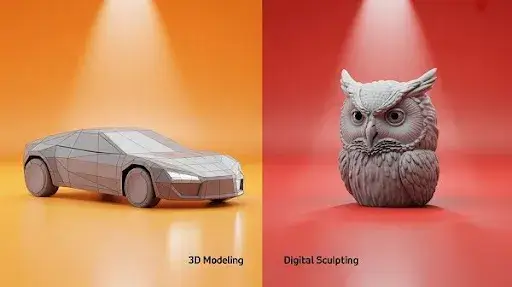
So, how do you know when to sculpt and when to model? There’s no universal checklist, but a few patterns repeat:
- Project type – Games need lean models. Films can indulge in sculpt-heavy workflows.
- Time and budget – Sculpting is fast for ideas, slower for cleanup. Modeling flips that around.
- The asset itself – Robots, cars, guns? Modeling. Faces, creatures, plants? Sculpting.
- Pipeline habits – Sometimes it’s not even about the artist’s preference. If a studio lives in Blender, they model more. If it’s a ZBrush-heavy team, sculpting dominates.
What’s Next
The wall between modeling and sculpting is crumbling. New tech is erasing the divide.
- AI Retopology is making the cleanup process less painful.
- Procedural Modeling (Houdini, for example) can generate entire environments without hand placement.
- VR Sculpting lets artists work with their hands again, almost like molding clay in real life.
- Hybrid Software is making it unnecessary to swap programs as often—Blender and Maya now carry sculpting brushes right inside their modeling toolkits.
Looking ahead, the distinction may not matter as much. Future artists will simply be “3D creators,” moving fluidly between tools without thinking twice.
Frequently Asked Questions
Which is easier for beginners?
Sculpting tends to feel natural to artists coming from drawing or painting. Modeling requires more patience with technical detail.
Can you skip sculpting for characters?
Technically, yes. But without it, characters often look stiff.
Which works better for games?
Both. Sculpting brings detail, modeling ensures assets run smoothly in real time.
Do you need different software?
Not necessarily. Blender covers both, though many professionals still prefer ZBrush for sculpting and Maya/Max for modeling.
Does sculpting matter in architecture or product design?
Rarely. Precision dominates there, but sculpting can help add a more human, organic touch.
Final Words
Modeling offers control and structure; sculpting offers energy and realism. The smartest pipelines don’t choose one—they weave both together. Sculpt for exploration and rich detail, model for efficiency and polish.
For artists, the real test isn’t about loyalty to one camp. It’s about flexibility—knowing when to pivot between workflows without losing momentum. That’s the difference between a passable asset and one that feels truly alive.
As one of the best animation studios in Baton Rouge, we offer the best 3D modeling services. Get in touch now.