Some games look like they were carved out of pure obsession. Others feel rushed, scattered, or visually confused. The difference between the two isn’t talent. It’s not the budget. It’s pre-production in game art, the most ignored, underestimated, yet brutally powerful stage of the entire game art pipeline.
At Prolific Studio, pre-production isn’t a checkbox. It’s where we find the pulse of a project. It’s where art stops being random ideas and starts becoming a visual system, a language, a plan.
If production is execution, pre-production is conviction. Without it, you’re not building a game, you’re collecting guesses.
[elementor-template id=”13845″]
Why Pre-Production in Game Art is the Backbone of the Entire Project
Pre-production is the phase where uncertainty goes to die. It’s where every texture, camera angle, character arc, color tone, environment mood, and animation behavior gets thought through before a penny is spent on full production.
A game art studio that rushes past this step ends up paying for it later in:
- Redesigns
- Missed deadlines
- Confused teams
- Disconnected visuals
- Blown budgets
Pre-production is risk control wrapped in creativity. It protects the vision, the timeline, and the final visual quality of the game.
Pre-Production in the Game Art Pipeline
Before characters move or environments breathe, the art direction needs a rulebook. Not vague vibes. Not cool references thrown in a folder. Actual decisions about light, texture depth, shapes, proportions, materials, and aesthetic identity. This stage turns subjective taste into objective direction.
It Turns Gameplay Ideas Into Visual Plans
Game mechanics affect art. A stealth-based title demands different lighting behavior than an arcade-style combat game. A fantasy environment has different density rules than sci-fi world-building. If the gameplay ideas and art direction don’t connect early, nothing fits later.
It Calculates Reality, Not Assumptions
You can dream 10/10 visuals. But can the engine, timeline, team, and 3D animation cost survive that dream? Pre-production answers this with math, not emotion.
Core Pillars of Pre-Production Planning in Game Art
1. Understanding the Game’s Story Without the Fluff
You don’t need a 90-page script to start. You need clarity on:
- Why the game exists
- What emotions should it trigger
- Who the player roots for
- What tone does the world speak in
- What visual legacy does it want to leave behind
This gives art direction a spine to grow on.
2. Converting Story Into Character and Environment Design
This is where ideas take shape. Literally.
Questions answered here:
- Does the hero look worn out or unstoppable?
- Are environments chaotic or controlled?
- Are colors grounded or exaggerated?
- Do shadows tell part of the narrative?
- Does architecture feel inviting or hostile?
At Prolific Studio, character and environment design isn’t decoration. It is storytelling in visible form.
3. Selecting the Right 3D Modeling Process Early
A wrong modeling approach can sink production speed. A smart one can accelerate everything.
This includes:
- Deciding between high-poly or optimized models
- Defining texture behavior
- Planning LOD systems
- Predicting asset memory impact
- Matching modeling depth to gameplay priorities
This step determines if production will flow or choke.
Concept Art Development

Concept art is not decoration. It is visual proof of direction. At Prolific Studio, concept art has three jobs:
- Explore different looks fast
- Remove bad ideas early
- Confirm great ideas with confidence
Concept art shapes:
- Characters
- Outfits
- Props
- Landscapes
- Color language
- Lighting identity
- Structural design systems
It evolves from rough sketches to exact reference sheets, so production teams don’t guess later.
Mood Boards That Control Emotion, Not Just Visuals
Mood boards aren’t random image dumps. They define emotional boundaries. A well-built mood board answers:
- How should players feel in scene A vs scene B?
- Should shadows act loud or quiet?
- Should textures look polished or imperfect?
- Does the environment feel new, ancient, or collapsing?
- Should colors whisper or punch?
It stops confusion before it starts.
Style Guide: The Rulebook Nobody Skips
A style guide is where:
- Color values get locked
- Shape language gets approved
- Lighting attitude gets decided
- Proportions get standardized
- Material behavior gets documented
This ensures the visual style for the game stays consistent even when 40+ hands touch production.
Why Storyboarding and Animatics Save Time, Money & Sanity
Storyboarding
This maps out camera choices, character actions, scene pacing, and emotional beats before animation starts. Think of it as a rehearsal on paper.
Animatics
This places rough motion, timing, voice placeholders, and camera movement on top of storyboards.
For game trailers, cutscenes, and cinematic sequences, this prevents:
- Awkward timing
- Weird camera logic
- Emotionless character beats
- Confusing scene flow
Every great game trailer services workflow runs on strong animatics.
Technical Planning and Asset Lists
This is where the art team meets reality. Here, decisions include:
- How many assets need to be created
- What gets built first
- Naming systems to avoid chaos
- Texture resolutions per platform
- Rigging complexity
- Animation frame budgets
- Rendering targets
- Export pipelines
The output is an asset list that acts like a production bible. Nothing missing. Nothing accidental. Nothing left to memory.
Software, Tools & Engine Decisions Done With Purpose

A pipeline collapses if tools don’t communicate well. We evaluate:
- Modeling tools (based on speed + team strength)
- Texturing software
- Animation systems
- Engine compatibility
- Rendering needs
- File handoff safety
- Plugin requirements
- Performance trade-offs
Every tool is chosen based on fit, not trend.
How Pre-Production Protects the Game Development Lifecycle
A structured pre-production planning in game art phase prevents:
- Unlimited revisions
- Guess-driven workflows
- Team misalignment
- Ever-growing budgets
- Endless rework loops
- Visual inconsistency
- Deadline ambiguity
It replaces chaos with clarity.
Where 3D Animation Services Factor Into Early Planning
3D animation services are expensive when planned late. It is manageable when planned early.
Decisions locked in pre-production include:
- Motion complexity
- Frame density
- Key pose direction
- Rigging requirements
- Cinematic animation vs gameplay animation budget split
- Facial animation depth
- Physics needs
- Simulation limits
This protects the team from exploding 3D animation costs midway.
Team Sync, Feedback Loops & Ownership in Pre-Production
A strong pre-production in game art stage lives by one rule: Nobody works in isolation.
Art, design, animation, and development must talk early, exchange opinions early, and challenge assumptions early. The later the feedback enters the process, the more expensive it gets.
Teams that don’t align in pre-production struggle with:
- Art that looks great alone but is inconsistent together
- Animation that doesn’t match character’s personality
- Environments that feel disconnected from the core concept of the game
- Trailers that look visually loud but emotionally empty
At Prolific Studio, feedback loops are daily, short, and focused. No giant review meetings where 40 comments get dropped at once. Small, quick checkpoints keep things moving, clear, and sane.
Building the Game Art Bible
A game art bible (sometimes called a design bible or art doc) is the heartbeat of pre-production planning in game art. It includes:
- Confirmed character sketches and final silhouettes
- Environment breakdowns
- Color palette codes (not generic mood references)
- Camera tone and shot language
- Technical boundaries for modeling and animation
- Animation style rules (snappy? fluid? exaggerated? realistic?)
- Rendering decisions that impact the visual quality of the game
This document evolves, but it never gets ignored. If someone new joins the team, they shouldn’t ask 50 questions. They should read one document.
Pre-Production for Game Trailers, Not Just the Game
Many studios build the game first and “figure out” the trailer later. That is reputation roulette. The smartest studios treat game trailer services as part of pre-production, not post-production.
Key trailer decisions made early:
- Which scenes sell the emotion, not just the gameplay
- What moments deserve cinematic treatment
- What parts should rely on rendering in 3D animation vs in-engine capture
- Music pacing and beat alignment
- Trailer runtime and audience psychology
Trailers built on pre-planned storytelling hit differently. Trailers built last-minute just look noisy.
Connecting the Game Art Pipeline With Production Reality
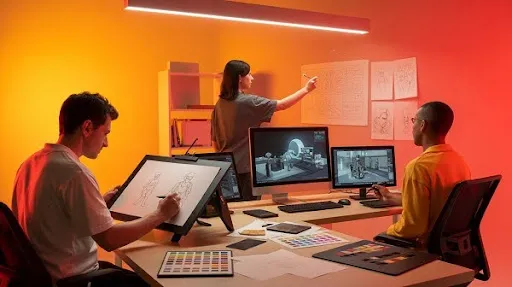
Pre-production protects creativity and practicality. This is where the studio determines:
- Can this character rig handle both cinematic close-ups and combat animations?
- Does the environment density match the performance goals?
- Is the 3D modeling process efficient or unnecessarily heavy?
- Does the animation budget match the deliverable timeline?
Solving these in pre-production protects months of production time.
Understanding the Player Before Creating the Art
Another stage many teams skip: audience clarity. Not demographics. Not age groups. Actual emotional expectations. Players of:
- Horror wants tension, uncomfortable silence, tight spaces
- Sci-fi expects sharp surfaces, neon logic, futuristic material language
- Adventure players want scale and wonder
- Strategy players need clarity, readability, logic over chaos
Art built without understanding the player becomes visual noise. Art built with it becomes a memorable identity.
Avoiding the Most Common Art & Animation Disasters
Pre-production exists to prevent predictable disasters like:
- Modeling teams building high-poly assets nobody optimized
- Animation starting before character rigs are finalized
- Texture artists working before color palettes are locked
- Cutscenes are animated before the camera language is set
- Trailers edited without narrative peaks
Most studios call these “unexpected problems.” They’re not unexpected. They’re unplanned.
How Character and Environment Design Shape Player Memory
Ask anyone about their favorite games. They’ll rarely mention UI, menus, or resolution. They remember characters, locations, lighting, and mood.
Memorability comes from:
- Recognizable silhouettes
- Repeated shape language
- Environmental storytelling
- Distinct lighting identity
- Emotional character posture
- Consistent world materials
Character and environment design is the memory machine of the game.
Cinematic vs Gameplay Animation
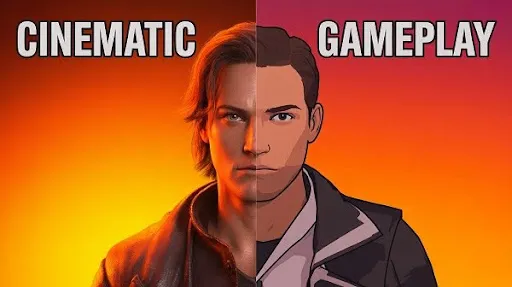
Blending the two without planning creates problems. Cinematic animation allows:
- Longer frames
- More exaggeration
- Higher facial detail
- Non-gameplay camera freedom
Gameplay animation needs:
- Speed
- Responsiveness
- Repetition safety
- Loop cleanliness
- Mechanical clarity
Pre-production assigns motion rules to both so they don’t clash later.
Learning From Visual Styles That Defined Eras
Art direction becomes iconic when it commits. Take the game’s unique 1930s-style animation from Cuphead. The style wasn’t accidental. It was locked in early, protected fiercely, and executed without compromise.
Take pre-production for film adaptation examples like Batman Begins. The game didn’t invent the mood. It translated an existing visual identity with discipline. Great visuals are not discovered in production. They are decided in pre-production.
Where Most Studios Fail vs Where Prolific Studio Wins
| Most Studios | Prolific Studio |
| Start by making assets | Start by defining vision |
| Animate first, fix later | Plan motion before production |
| Let tools dictate style | Let style dictate tools |
| Build the first trailer at the end | Map trailer moments in pre-production |
| Guess art direction | Systemize art direction |
| Fix inconsistencies later | Prevent inconsistencies early |
The difference isn’t skill. It’s a sequence.
The Emotional ROI of Pre-Production in Game Art
Good pre-production gives teams:
- Confidence, not confusion
- Direction, not trial-and-error
- Focus, not scattered tasks
- Unity, not personal interpretations
And the game gets:
- Stronger identity
- Sharper visuals
- Better pacing
- Higher market appeal
- Better trailers
- Cleaner animation
- More production efficiency
This is why pre-production isn’t a luxury. It’s oxygen.
Frequently Asked Questions
What does a game art studio finalize during pre-production?
Art direction, characters, environments, color palettes, modeling style, animation rules, asset lists, trailer planning, engine needs, and performance limits.
Does pre-production include game trailers?
Yes, it should. The best game trailer services are planned early with emotional beats, camera language, and animation style locked beforehand.
How does pre-production impact 3d animation cost?
It controls complexity before production starts by setting motion limits, rig depth, frame budgets, physics rules, and scene priorities.
What role does storyboarding and animatics play?
It blocks motion, camera, timing, and emotion early, so animation and trailer teams don’t redo work later.
Final Words
Games that look unforgettable weren’t luck. They were planned with discipline. Pre-production in game art is where a game stops being a loose idea and starts becoming a visual identity, a crafted experience, a cohesive world.
If you want a game that looks intentional, plays emotional, and sells itself visually through gameplay and trailers, it needs pre-production as its foundation. At Prolific Studio, we don’t paint visuals on top of a game. We build the game from its visuals with our game animation services.
If you’re ready to skip the chaos, cut the guesswork, and build a game with clarity instead of compromise, we’re here. Let’s shape the art before we ship the game.
Related Articles: