Think about the last time a scene made you stop and stare. A tower folding in on itself like cardboard. A wolf’s fur rippling in the wind as if you could reach out and touch it. Waves pounding against rocks so fierce you almost lean back in your chair. None of it was filmed. All of it was built with VFX in 3D animation.
VFX is not just a stage in the 3D animation pipeline; it’s what makes the unbelievable look believable. Strip away visual effects in animation, and the biggest action films, fantasy series, and even flashy commercials lose half their punch.
It’s not only about blowing things up or conjuring monsters. It’s about detail: the smoke curling behind a car, the sparkle in a character’s eye, the movement that convinces your brain this is real.
That’s where professional 3D animation services shine. They don’t just drop visuals onto a timeline. They craft experiences that keep you glued to the screen. To see how, let’s walk through the building blocks of VFX in 3D animation.
What VFX in 3D Animation Actually Means
At its core, visual effects in animation are digital tricks that make a plain shot extraordinary. Explosions, fog, glowing magic, collapsing stone walls, even the tiny dust particles floating in sunlight, they’re all stitched in through VFX.
Inside the 3D animation pipeline, VFX enters after the heavy lifting of modeling, rigging, and animating is done. Artists take that base animation and layer on effects that push the visuals from good to unforgettable. And it’s not just eye candy, it’s about pulling emotion from the audience.
Done right, VFX makes animation immersive. That’s why titles like Avatar or episodes of Game of Thrones are still talked about years later. The effects don’t just decorate the scene; they make the scene possible.
The global VFX market’s size was around USD 5.67 billion in 2025, anticipated to increase to USD 6.17 billion in 2026, and projected to hit USD 12.22 billion by 2034, growing at a CAGR of roughly 8.9% during the span of 2025-2034.
Where VFX Sits in the 3D Animation Pipeline
The pipeline of 3D animation has many stages: concept, modeling, rigging, texturing, animation, lighting, rendering, and editing. VFX sneaks in during the middle and stays till the end.
Why it matters:
- Mixing with live action: When real footage and animation collide, VFX makes them feel like one shot.
- Lifting pure animation: Even without actors, projects need fire, water, rain, or wind to feel alive.
- Finishing touch: The final pass of VFX workflow steps is what transforms “okay visuals” into “can’t-look-away.”
Take VFX out, and the 3D animation pipeline looks flat. Add it back, and the whole project breathes.
Core Types of VFX in 3D Animation
Particle Simulation VFX
Want sparks flying off a blade? Dust hanging in the air? Fire burning with a natural flicker? That’s particle simulation. Artists tweak the size, color, speed, and lifespan of these tiny elements until they feel authentic.
Fluid Simulation in Animation
Water is unforgiving. It has to flow and crash the way your brain expects. Fluid simulation in animation mimics how real liquids behave, waves, splashes, ripples in a glass, and even oil dripping slowly. It’s one of the hardest tricks to pull off, but when it works, it sells the shot instantly.
Hair and Fur Simulation VFX
Nobody’s animating every strand of hair by hand. Hair and fur simulation VFX uses physics to move thousands of strands naturally. From a lion’s mane shifting with each step to a character’s curls bouncing, this system makes living things feel alive.
Body Simulation in 3D Animation
There are two flavors here:
- Rigid-body: Solid objects that crack, fall, or collide, such as falling rubble or a tower breaking apart.
- Soft-body: Flexible materials like clothing, skin, or rubber that bend and bounce.
Both matter. Without them, collapsed walls look fake and clothes look stiff.
VFX Workflow Steps in 3D Animation
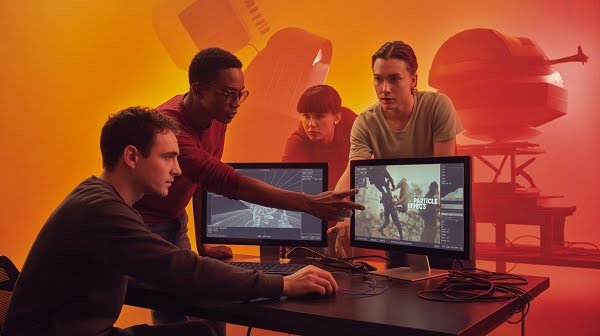
Visual effects don’t just appear. They go through a chain of steps that keep everything consistent and believable.
Pre-Production
Before the first effect is built, the team meets to plan. What shots need VFX? How long will they take? What’s the budget? This stage keeps chaos out of the pipeline.
Asset Creation
Characters, sets, and props are modeled and textured. These assets become the stage for effects to interact with.
Animation Setup
Movements, performances, and camera work are animated. This is the backbone that VFX attaches to.
Matchmoving and Tracking
If live footage is involved, camera moves are recreated digitally so the animation lines up perfectly.
Compositing in 3D Animation
This is where everything clicks together. Backgrounds, characters, effects, and live footage are stacked, blended, and cleaned until they look like one shot.
Effects and Simulations
Here’s the fun part: adding the sparks, smoke, rippling fabric, crashing waves, or flowing hair that elevate the scene.
Lighting and Rendering
Lighting matches the environment, then rendering produces the crisp frames, complete with depth and shadows.
Editing and Final Pass
All the VFX shots are handed to editors who cut, trim, and polish them to fit the story’s rhythm.
VFX Software for Animation
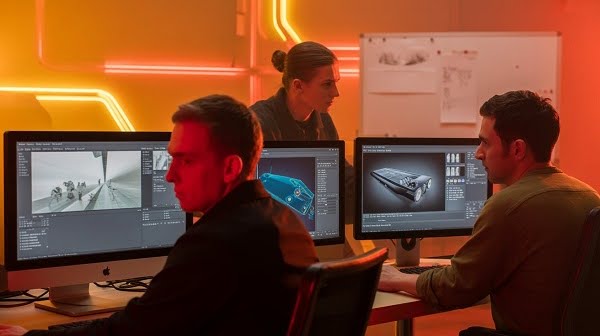
The toolbox matters as much as the technique. Most professional 3D animation services use a mix of these:
- Autodesk Maya for VFX: Great for modeling, rigging, and animation.
- Houdini VFX simulations: Industry favorite for particles, fluids, and complex destruction.
- Adobe After Effects: Go-to for compositing and post-production polish.
- Foundry Nuke: High-end compositing and color work.
- Autodesk 3ds Max: Solid for modeling and environments.
- Blackmagic Fusion: Strong CGI integration and effects layering.
Supporting software like Cinema 4D, ZBrush, Substance Painter, Arnold, and V-Ray often come into play for specific needs.
Types of VFX Techniques You’ll See Most Often
- Environmental and creature effects: Weather systems, fire, smoke, or creatures like dragons.
- Destruction effects: Buildings collapsing, glass shattering, explosions.
- Magical effects: Spells, energy beams, glowing enchantments.
- Cinematic effects: Lens flares, motion blur, depth of field.
- Simulation effects: Cloth swaying, water flowing, fur bouncing.
- Compositing effects: Blending animated elements into real footage, with color tweaks to finish.
Real-World Applications of VFX in 3D Animation
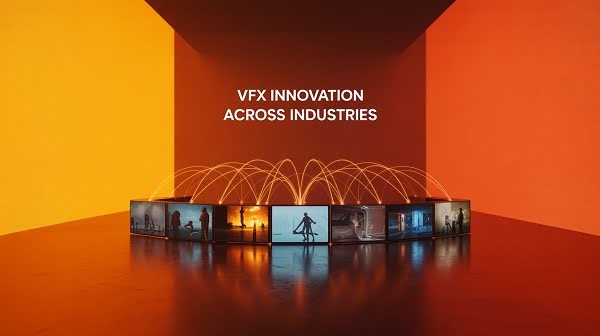
When people hear “VFX,” they usually think of dragons, collapsing skyscrapers, or superheroes darting through the clouds. That’s the flashy side, sure. But visual effects pop up almost everywhere, even in moments you’d never expect. If you’ve ever squinted at a scene and thought, “Hold on… was that actually real?” you’ve been tricked by VFX.
Film and Television
Cinema is VFX’s playground. Take Avatar, Interstellar, or Avengers: Endgame. Strip away the layers of effects, and you’d see actors standing against dull sets. What many people don’t realize is that smaller productions rely on it just as much.
A romance film might quietly replace grey skies with a pink sunset. A gritty drama could alter the look of a city block to set the tone. Even sitcoms lean on “invisible” effects, removing props, fixing continuity, and stretching sets so the budget doesn’t balloon.
TV isn’t any different. Think of Game of Thrones. Yes, the politics made headlines, but it was the dragons and sprawling battles that made viewers’ jaws drop. Without VFX, you’d be left with costumes, actors, and a lot of green screen.
Gaming
Gamers expect more than good graphics; they expect worlds that respond. Sparks fly when blades clash. Water ripples around your feet. Cities crumble when struck. These details are built with VFX. Without them, open worlds would feel stiff, like cardboard cutouts.
Advertising and Branding
Ever seen a sneaker blaze across the screen, leaving fire trails? Or a soda can explode into a wave? That’s advertising with VFX. In a world where attention spans are shrinking, brands can’t afford to be boring.
Effects let them build moments that stand out, at a fraction of the cost of elaborate physical sets. This is why professional 3D animation services have become staples in high-impact campaigns.
Architecture and Design
Blueprints used to be enough. Not anymore. Clients today want to step inside their projects before construction even starts. Animated walkthroughs, realistic sunlight, or even a storm rolling over a future building, all of it helps people see what’s possible and avoid costly errors.
Education and Healthcare
This is where VFX quietly shines. Medical animations turn complex surgeries into visuals that students can actually follow. Documentaries use it to carry viewers inside a black hole or deep into a cell. Interactive classrooms lean on effects to make abstract lessons stick. In these spaces, VFX isn’t about spectacle; it’s about clarity.
Emerging Trends in VFX
This field never slows down. What felt groundbreaking five years ago now feels routine. Here’s what’s shaping tomorrow:
- Real-Time VFX with Game Engines: Tools like Unreal and Unity let directors tweak effects on set instead of waiting days for renders. (The Mandalorian popularized this approach.)
- AI and Machine Learning: Repetitive tasks, rotoscoping, tracking, cleanup are being automated. Instead of replacing artists, it frees them to focus on storytelling.
- Photorealistic Rendering: Engines like V-Ray and Arnold blur the line between a render and a photo. Perfect for advertising prototypes or impossible film sets.
- VR and AR: Training, shopping, entertainment, all thrive on believable effects. Without them, immersion falls apart.
- Cloud Collaboration: Artists no longer need to share a room. Teams from Karachi to New York can polish the same shot in real time.
Challenges in the Industry
For all its magic, VFX isn’t without headaches:
- Costs keep climbing, powerful hardware and expert talent aren’t cheap.
- Rendering still devours hours, sometimes days.
- Skilled professionals are in short supply.
- Audiences are harder to impress; what stunned us a decade ago now feels ordinary.
- Some things remain tough to simulate: nuanced emotions, subtle natural phenomena.
And yet, it’s often these limits that spark the next breakthrough.
Careers in VFX and 3D Animation
The demand for skilled professionals has never been higher. Roles range widely:
- VFX Artist: creates effects like fire, smoke, or particles.
- Compositor: blends digital with live-action seamlessly.
- 3D Modeler: builds digital assets.
- Technical Director: solves simulation bottlenecks.
- Animator: breathes life into characters.
- Lighting Artist: sets the mood and realism.
If you love tech but crave creativity, this is a career path that won’t vanish anytime soon.
Frequently Asked Questions
How long does VFX take?
Anywhere from weeks for a small ad to years for a major film.
Is VFX only for entertainment?
Not at all. It powers games, advertising, architecture, healthcare, and education.
Best beginner software?
Blender and Adobe After Effects are good entry points. Advanced artists often use Maya, Houdini, or Nuke.
Can small businesses use VFX?
Yes. Even subtle effects in a short campaign can make a local brand stand out.
Final Words
VFX in 3D animation isn’t just fireworks and fantasy beasts. It’s the craft that makes modern storytelling believable. Whether you’re watching a blockbuster, playing a game, or sitting in a classroom, chances are you’re already under its spell.
And as technology grows, and professional 3D animation services keep stretching boundaries, visual effects will only become more central to how we see, feel, and connect with stories.
Get in touch with Prolific Studio, one of the best animation studios in Washington, DC, and have yourself delivered the best VFX services for your animation project.
Related Articles: