Scroll through any feed and you’ll notice something: the clips that look flat vanish from memory, the ones that feel alive make you stop. That’s the appeal of 2.5D animation.
It doesn’t get trapped in the nostalgic traditional 2D animation style, nor does it go through the tedious, costly process of complete 3D animation. It is an animation style that takes the best of both and finds a practical solution.
By smartly layering and repositioning the two-dimensional assets, adding a touch of light or camera movement creates a light depth illusion. The final outcome is the type of animation that captures the audience’s attention and is used in promotional content, ads, and explainer videos, without burning a hole in the marketing budget.
[elementor-template id=”13845″]
What is 2.5D Animation?
At its core, it’s a flat artwork that’s been tricked out to feel like it has space. Characters, icons, or shapes start as simple two-dimensional designs. The magic happens in the way they’re animated, so your eyes sense depth, even though it isn’t really there.
Animators use tricks such as camera pans, shadow work, and parallax scrolling in place of constructing complete 3D models. These tricks give the illusion that the scene is more detailed than a standard 2D animation, but is far more economical and faster than a full 3D model.
Think of it like this:
- 2D: flat drawings, direct and simple.
- 3D: fully built models you can rotate, twist, and view from any angle.
- 2.5D: 2D graphics moved and arranged so they give off a semi-3D vibe.
That mix is why this style has spread so fast. There is space to innovate without feeling too “new.” That’s an ideal value when it comes to marketing, education, as well as gaming and storytelling.
How is 2.5D Different from 2D and 3D Animation?
This is where people usually get confused. Some assume it’s just 2D with a filter, others think it’s budget 3D. The truth is: it’s its own lane.
2D Animation
Everything is flat. Characters, props, scenery, it all lives in two dimensions.
- Strong for storytelling and stylized visuals.
- Affordable and fast, which is why every 2D animation company offers it.
3D Animation
Everything is built inside three-dimensional space. You can rotate it, play with light, and chase realism.
- Great for film, product design, or architectural walkthroughs.
- Gorgeous results, but long hours and big budgets.
2.5D Animation Style
This one borrows techniques from both worlds. No full models, but no plain flatness either.
- Uses layering, shadows, and camera tricks to fake depth.
- Costs less, looks modern, and works across industries.
Therefore, if someone were to ask what 2.5D animation is, the candid answer is that it is a practical middle ground. It is positioned between 2D and 3D, requiring less work than 3D while offering more depth than 2D.
Why 2.5D Animation Videos Are Everywhere
Open an ad library or scroll through explainer reels, and you’ll spot them. This isn’t hype for hype’s sake. Brands use this style because it gets the job done.
- Looks impressive without heavy steps
You get the richness of 3D visuals without waiting months for a production pipeline to finish.
- Easier on the budget
No expensive render farms or complex rigs. Most studios can pull it off with what they already have.
- Works in any industry
Finance, healthcare, SaaS, startups, any sector that deals with abstract ideas can benefit from clear, dimensional visuals.
- Marketing-friendly
It makes explainers sharp, spots shine, and presentations more lively.
- Has its own recognizable vibe
When most competitors still rely on flat 2D, the extra depth stands out instantly.
When to Choose 2.5D Animation Video
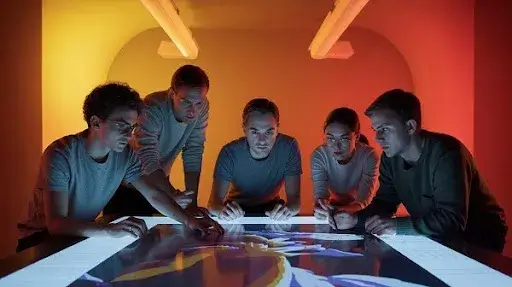
This style isn’t always the right tool. But in some situations, it’s perfect.
- Spotlighting a key object
Maybe you’re showing off a product. Keep the background simple and give the product dimensional touches. It pops right away.
- Working with geometric shapes or objects
Charts, buildings, cubes, anything structured gains energy when treated in 2.5D.
- Saving time and money
Smaller teams often lean into this style. It avoids the grind of 3D production yet still looks polished.
- Standing apart
If your competitors are stuck on flat 2D animation, using this format makes your brand look more current.
2.5D Animation Examples Across Industries
It’s easier to understand by seeing how different fields use it:
- Healthcare: explainer videos where devices or systems have depth while people or background remain flat.
- Finance: presentations with graphs that rise and fall like they’re 3D.
- Tech: animations of servers, apps, or “the cloud” as 3D-like objects against clean backdrops.
- Entertainment: indie games and shorts using a semi-3D look without high production costs.
All of these show why 2.5D has become a versatile, go-to option.
The Main Tricks Behind the 2.5D Animation Style
So, what’s happening under the hood? Here are the main techniques animators use:
- Layering: place graphics on separate planes, then move the virtual camera to create parallax depth.
- Lighting and shadows: add highlights and shadows to turn a flat design into something that feels solid.
- Camera work: pans, tilts, and zooms make the scene feel alive without altering the objects themselves.
- Mixing in small 3D assets: Sometimes, the mere addition of one 3D element is enough to sell the illusion when combined with 2D assets.
Those are the tools that give this animation style its semi-3D edge.
Why Brands Choose 2.5D Animation Video

It isn’t just about looking cool. For businesses, the style solves real problems.
- Turns complex into simple
SaaS, fintech, and healthcare often struggle to explain what they do. A 2.5D animation video makes those ideas easier to grasp.
- Keeps people watching
The mix of flat with dimensional movement grabs attention better than static slides.
- Strong return on spend
Looks professional without needing the massive spend of 3D.
- Fits with any tone
Fun, serious, minimalist, playful, it adapts easily to brand style.
That’s why more than one 2D animation company now offers 2.5D as part of its package.
Comparing 2D, 2.5D, and 3D for Marketers
Here’s one way to sort them out if you’re planning campaigns:
- 2D animation: character-driven stories, light explainers, cartoons.
- 3D animation: realistic product demos, architectural previews, or big-budget projects.
- 2.5D animation style: strong visuals with good impact, without draining resources.
For marketing teams, this breakdown makes it easier to pitch the right option to decision-makers.
The Process of Creating a 2.5D Animation Video
Understanding the theory is one thing, but the real fun starts when you peek into how a 2.5D animation video actually comes together. Unlike full-blown 3D, which demands armies of specialists and endless rendering time, the 2.5D workflow is much lighter.
In many cases, the same setup a 2D animation company already uses is enough; it’s just about layering and arranging things differently.
Here’s how the journey usually unfolds:
Step 1: The Script That Sets Direction
Every project kicks off with a core idea. It could be a new service, a product launch, or even a campaign with a specific message. A script is where it gets direction. It decides not only what’s being said but how the visuals will keep pace with the message. Without this step, the rest of the process feels scattered. With it, everything flows naturally.
Step 2: Storyboarding Depth
Storyboards act as the visual blueprint. For 2.5D animation, these sketches aren’t just about what goes on the screen; they map out depth. Designers figure out what sits in front, what lingers in the back, and how the “camera” will travel.
Take a fintech video: a rising bar chart could dominate the front layer while floating text hangs slightly behind it. Even in rough sketches, the sense of depth is already being tested.
Step 3: Crafting the Assets
Here’s where artists step in. Characters, shapes, infographics, icons, and backgrounds are drawn. Even though they’re technically 2D, they’re built in parts, separate hands, movable heads, and text that lives on its own layer. This isn’t just for fun; it’s what makes the animation smooth later. If everything were fused together, movement would feel stiff.
Step 4: Building Space With Layers and Camera Moves
Once assets are ready, they’re placed into digital 3D space using tools like After Effects. Then comes the clever trick: instead of animating each detail, designers move a virtual camera. A simple zoom-in on a layered chart or a slow pan across an infographic is enough to trick the brain into sensing depth. The magic lies in using perspective smartly, not in heavy 3D modeling.
Step 5: Lighting and Effects
This step adds polish. Shadows, gradients, and glow effects: these small details turn flat graphics into visuals with presence. A button that pulses slightly or a chart that reacts to lighting feels far richer than a plain illustration. This is usually where videos shift from “good” to “professional.”
Step 6: Polishing the Final Cut
The last round ties everything together. Timing gets refined, transitions are adjusted, and audio syncs with visuals. Since it avoids the grueling render times of 3D, the process wraps up much quicker. A 2.5D project can often go from concept to delivery in weeks, not months.
This lighter pipeline is one of the main reasons 2D studios expand into 2.5D; it feels familiar, but with more possibilities.
Where the 2.5D Animation Style Works Best
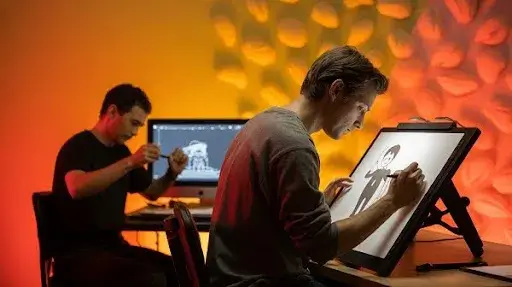
Part of the reason 2.5D is in such high demand is due to its adaptability. It can be incorporated into various types of projects without requiring unrealistic deadlines or excessive costs.
- Explainer videos: It’s a favorite among SaaS companies and startups for visualizing abstract processes that are too complicated to explain.
- Advertising campaigns: Fast, polished, and scalable, ideal for seasonal promotions.
- Education and training: Students and employees stay focused longer when lessons are animated instead of flat.
- Healthcare: Medical explainers or equipment demos benefit from the semi-3D look without intimidating the audience.
- Entertainment and gaming: Indie developers use it to add layered depth to environments without the cost of 3D.
- Social media content: Short, scroll-stopping clips are easy wins with this style.
It’s no surprise that marketing teams, educators, and content creators are all leaning on this format.
Why Businesses Favor 2.5D
For decision-makers, it’s not just about looks. It’s about balancing impact with practicality. A 2.5D animation video checks several boxes at once:
- Lower costs – no massive render farms or highly specialized rigs.
- Faster delivery – campaigns go live in weeks instead of months.
- Polished style – deeper than flat 2D but less demanding than 3D.
- Adaptability – works across industries, from fintech to lifestyle.
- Engagement – layered visuals hold attention where static graphics fail.
It hits the sweet spot between budget, timeline, and audience appeal.
2D vs. 2.5D vs. 3D Animation
So, how do you decide between the three?
- 2D animation is perfect for playful, story-driven content or when cost is the priority.
- 3D animation excels when realism is crucial, think product demos or architectural walkthroughs.
- 2.5D animation balances both worlds: affordable, modern-looking, and versatile.
Plenty of brands actually blend formats. A company, for example, may deploy 2.5D for their primary explainer video while producing minimal 2D animations for rapid-fire socials.
Practical Benefits for Companies
Looking at it through a business lens, the style offers advantages that go beyond aesthetics:
- Explains complex topics in digestible ways.
- Keeps audiences engaged longer than slides or flat graphics.
- Signals professionalism and a current design approach.
- Delivers solid ROI by cutting down costs without cutting corners.
No wonder agencies now market 2.5D as a core offering alongside 2D and 3D.
Frequently Asked Questions
Final Words
At the end of the day, 2.5D isn’t about picking a halfway point between 2D and 3D; it’s about using the strengths of both. It gives startups a chance to look polished without spending heavily, keeps learners tuned in, and helps established brands freshen their image with a faster turnaround.
The real strength of a 2.5D animation video is its ability to stick with people. It decompresses the dense, generates engaging movement, and arms brands with contemporary positioning without budgetary strangulation.
Get in touch with Prolific Studio, one of the best animation studios in Hollywood, and get your 2.5D animation done today!