2D animation is having a moment. Again.
We are at a point in time where everything is dominated by hyper-realistic 3D and motion graphics, but the charm and clarity of 2D animation remain unmatched.
As you scroll through social media, binge-watch the latest animated series, or explore branded explainer videos, you’ll find 2D animation quietly ruling the visual landscape.
According to one report, this is why the 2D animation market value is projected to reach USD 92.93 billion in 2030, up from USD 35.64 billion in 2022.
But here’s the thing: 2D animation isn’t just cartoons and nostalgia. It’s a powerful, evolving art form, used by top studios, marketers, educators, and game developers.
So, what is 2D animation? How does it work, and why are professionals still choosing this age-old style in 2025’s content-saturated market?
Let’s break it all down, creatively, clearly, and comprehensively.
[elementor-template id=”13845″]
What is 2D Animation?
At its core, 2D animation refers to creating movement in a two-dimensional space. This style involves flat characters, backgrounds, and objects, drawn or generated in a two-dimensional digital environment.
Frames are arranged sequentially, and when played in rapid succession, they create the illusion of movement.
Unlike 3D animation, which adds depth and perspective, 2D animation plays with height and width. It focuses more on lines, timing, and composition than volume or realism, making it stylized, expressive, and sometimes even more emotionally powerful.
From hand-drawn classics like The Lion King to sleek digital videos made using Toon Boom or Adobe Animate, 2D animation is a versatile medium that has transformed massively over the decades.
Breaking Down 2D Animation Styles
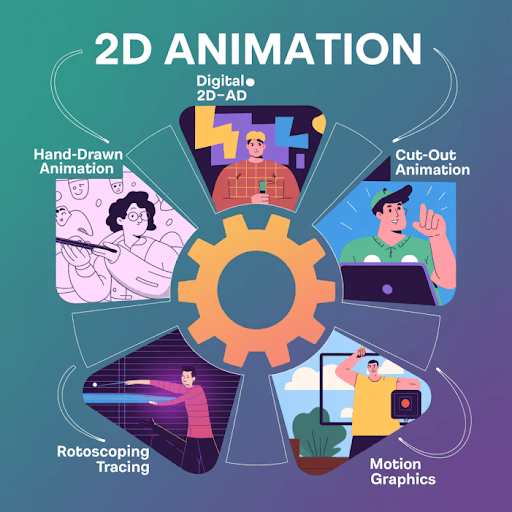
Not all 2D animation looks or feels the same. In fact, breaking down 2D animation styles reveals just how creatively flexible this medium can be.
1. Traditional (Hand-Drawn) Animation
This is where it all began. Each frame is individually drawn by a 2D animation artist. Think early Disney, Studio Ghibli, or classic anime. While time-consuming, the emotional weight and organic movement of this style make it timeless.
2. Digital 2D Animation
Modern 2D animation is mostly created using software like Toon Boom Harmony or TVPaint. The drawing may still be frame-by-frame, but layers, rigging, and effects are added digitally, making the workflow of 2D animation more streamlined and efficient.
3. Cut-Out Animation
This style uses movable parts, like puppet rigs, instead of drawing each frame. Think South Park or digital explainer videos. It’s quick to produce and ideal for marketing or educational content.
4. Rotoscoping
An interesting technique where animators trace over live-action footage to create realistic movement. It gives a surreal or gritty visual effect and is often used in films or music videos.
Related Article: Guide to Rotoscope Animation: Techniques, Tools, and Trends
5. Motion Graphics
While not always character-driven, motion graphics still fall under the 2D umbrella. Used extensively in ads, interfaces, and explainer videos, they focus more on typography, shapes, and data visualization.
Why 2D Animation is a Versatile Medium
2D animation is a versatile medium, not just in style, but also in where and how it’s used. It adapts to multiple industries and storytelling formats, including:
- Entertainment: Cartoons, anime, web series, and films
- Marketing: Product explainers, brand storytelling, ads
- Education: E-learning content, whiteboard animations
- Gaming: Mobile and indie games use 2D art for characters and backgrounds
- Social Media: Snappy visual content to grab attention in feeds
This adaptability makes 2D animation ideal for tight budgets, faster turnarounds, or specific aesthetic goals. When created by skilled 2D production companies in the USA or beyond, it rivals and often outperforms flashier formats in terms of engagement.
Understanding the Full 2D Animation Production Process
A lot goes on behind those few minutes of movement. Let’s go in-depth into the full 2D animation production process, broken into clear stages for beginners.
1. 2D Animation Pre-Production
Pre-production is the foundation. Here’s where your animation is shaped creatively and strategically.
Key Elements of Pre-Production:
- Concept Development: The initial idea, story, or message is outlined.
- Scriptwriting: A clear and concise script is crafted. Every frame counts, so dialogue and narration are carefully curated.
- Storyboarding: A visual plan that maps out key scenes, transitions, and character actions.
- Character Design: Based on the target audience and tone, unique character models are designed. A skilled 2D animation artist creates multiple expressions, poses, and angles.
- Animatic: Think of it as a moving storyboard. Scenes are timed with voiceovers or rough music to preview pacing and visual rhythm.
2. 2D Animation Production Stage
The magic starts here.
Once the blueprint is ready, artists and animators bring characters and scenes to life using tools like Toon Boom Harmony, Adobe Animate, or Moho.
Main Steps in the Production Stage:
- Keyframe Animation: Lead animators sketch out the primary poses that define motion.
- In-Betweens (Tweening): Secondary animators or software generate intermediate frames, creating fluid transitions.
- Rigging (Optional): For cut-out style animations, characters are “rigged” like puppets, allowing controlled, repeated motion.
- Backgrounds and Assets: Artists design static or moving backgrounds that complement the characters.
- Clean-Up and Linework: Rough sketches are refined into clean lines, making them ready for coloring.
3. Post-Production Polish
Your animation is nearly there, but post-production turns it from “good” to “great.”
- Coloring: Every frame is filled with flat colors, gradients, and shadows.
- Lighting and Visual Effects: Sparkles, blurs, weather effects, all added here.
- Sound Design: Background music, dialogue sync, and sound effects are all layered in for a rich audiovisual experience.
- Final Render: Exported in the correct format and resolution, ready for delivery.
What Makes a Great 2D Animation Artist?
A successful 2D animation artist needs more than just drawing skills. Here’s what defines excellence in the industry:
- Strong understanding of timing, spacing, and movement
- Familiarity with industry-standard software
- Storytelling instincts and attention to emotion
- Ability to collaborate and adapt to different animation styles
- Clear grasp of design principles, color theory, and composition
The Workflow of 2D Animation in 2025
The workflow of 2D animation has evolved significantly in 2025, thanks to smarter tools and cloud-based collaboration. However, the foundation remains unchanged: storytelling, precision, and visual clarity. Let’s dive into how the typical 2D animation workflow looks for professionals today:
1. Creative Kick-Off and Research
Before a single line is drawn, the team dives deep into audience research, competitor benchmarking, and platform requirements. This phase defines the tone, style, and messaging for the animation.
2. Styleframes and Look Development
These are polished stills that preview the final look, including color palettes, lighting, and overall visual direction. They help stakeholders visualize the outcome and sign off on the artistic vision.
3. Asset Creation
Every element, character, prop, icon, text, and background is designed as reusable, layered components to speed up animation later.
4. Scene Setup and Animation
The animator imports all assets into the timeline. Depending on the chosen style (cut-out, frame-by-frame, or hybrid), motion is built scene-by-scene.
5. Review, Feedback, and Revisions
Internal reviews are followed by client feedback. Revisions may include tweaking pacing, adjusting expressions, or refining transitions. A smooth workflow here saves time and rework.
6. Final QA and Delivery
Each frame is checked for alignment, color issues, and audio sync. The final file is rendered and delivered in MP4, MOV, or platform-specific aspect ratios in the required formats.
In highly reputable 2D production companies in the USA, this entire pipeline is streamlined using project management software, shared asset libraries, and synced editing tools.
You may also like: Game Trailers vs. In-Game Cutscenes
Modern 2D Animation Trends Shaping 2025
In 2025, modern 2D animation is experiencing a renaissance. Thanks to social platforms, remote teams, and accessible software, 2D animation is no longer seen as “basic” but bold, stylish, and human.
Here are the key trends defining this resurgence:
1. Mixed Media Animation
Animators now blend 2D with photography, textures, and even 3D objects to create hybrid visuals. This approach offers artistic depth without losing the clarity of flat design.
2. Looping Animations for Social Media
Seamless, looping scenes, especially character reactions, mini-storylines, or product highlights, dominate reels and stories. They’re short, catchy, and endlessly shareable.
3. AI-Enhanced Frame Generation
While AI can’t replace storytelling, it assists animators with in-betweening, cleanup, and coloring. This reduces manual load and accelerates production timelines.
4. Interactive 2D for Web and Apps
From gamified websites to scroll-triggered infographics, 2D animation is becoming more responsive and coded into frontend frameworks like React and GSAP.
5. Minimalist Design
Clean lines, bold colors, and reduced clutter are back in trend. Think Duolingo-style animations, instantly recognizable, emotionally engaging, and functionally clear.
The Price of the 2D Animation
The price of the 2D animation varies greatly, depending on the project’s complexity, duration, style, and production quality. But here’s a breakdown to give you a ballpark idea:
| Project Type | Price Range (USD) | Timeframe |
| Social Media Clip (15s) | $300 – $1,000 | 1–2 weeks |
| Explainer Video (60s) | $1,000 – $5,000 | 2–4 weeks |
| Animated Short Film | $5,000 – $25,000+ | 1–3 months |
| Educational Series | $10,000 – $50,000+ | 3–6 months |
These costs usually include scripting, storyboarding, voice-over, animation, and editing. Top 2D animation studios in Dallas and 2D animation services in Los Angeles may charge premium rates, but also deliver studio-level quality with faster turnarounds.
Still, mid-tier freelancers and boutique agencies offer excellent value, especially for startups or one-off campaigns. The key is clarity: Know your goals and choose an animation partner who fits your creative needs, not just your budget.
When to Use 2D Animation: Strategic Applications
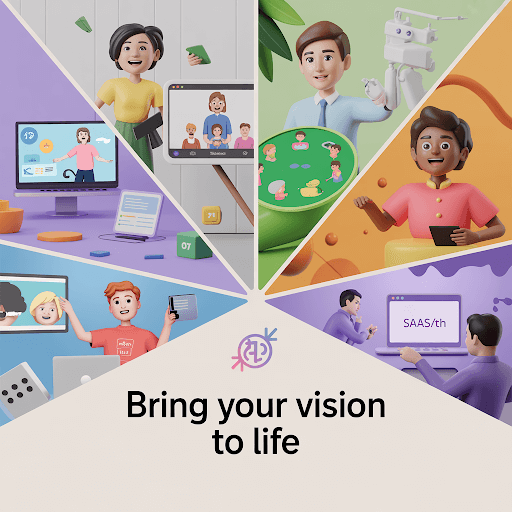
2D animation is a versatile medium. Its accessibility and creative range make it perfect for various industries and use cases:
- Marketing & Advertising: From animated ads to social content, it makes your message memorable.
- Education & Training: Visual learning enhances retention; animated lessons are engaging and scalable.
- Healthcare & Pharma: Explaining medical processes visually simplifies complex concepts.
- Entertainment: Short films, web series, mobile games, and 2D animation power them all.
- SaaS and Tech: Showcasing app features or onboarding flows with motion keeps things user-friendly.
What Happens in 2D Animation Pre-Production?
The 2D Animation Pre-production phase is the planning stage, where concepts turn into blueprints. Here’s what typically happens in this critical stage:
Scriptwriting
Every animation starts with a script. It defines the narrative, dialogue, visual actions, and timing.
Storyboarding
A storyboard visualizes the script frame-by-frame. It helps map out scenes, camera angles, and transitions.
Character & Environment Design
Original characters and settings are sketched based on the project’s tone. These will later be digitized and animated.
Animatics
Think of animatics as rough drafts of the animation. They combine storyboard images with temp audio to give a sense of pacing.
In experienced 2D animation production companies in USA, this stage is collaborative and iterative. It sets the tone for the entire production.
Inside the 2D Animation Production Stage
Once the planning is done, we enter the 2D Animation Production Stage, the heart of the animation process.
Asset Rigging
If using cut-out animation, assets are “rigged”, meaning they’re given virtual joints so they can be moved.
Scene-by-Scene Animation
Animators bring each moment to life, guided by storyboards and timing charts. This is where character acting, effects, and emotional beats are built.
Voiceover Syncing
Voice recordings are synced with animated mouth movements and body language to match tone and timing.
Sound Effects & Music
Adding audio layers enhances the immersive quality, footsteps, background noise, and swells of music at key emotional points.
Hiring a 2D Animation Artist vs. Studio: What’s Better?
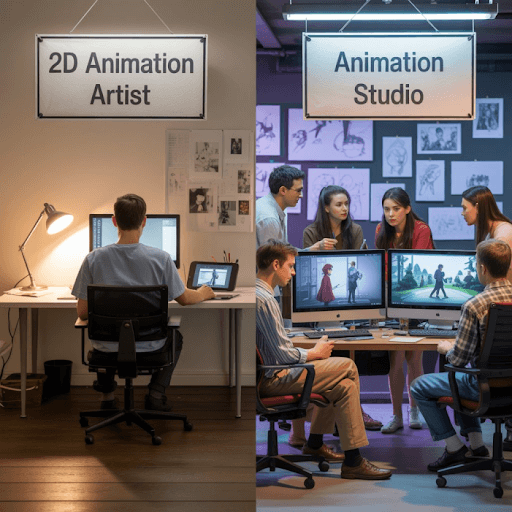
You might wonder: Should I hire a freelance 2D animation artist or a full 2D animation studio?
Here’s a quick comparison:
When to Hire a 2D Animation Artist:
- You need something simple or short-form
- You already have a script and voiceover
- Your budget is tight, but quality is still important
When to Hire a Studio:
- You need concept-to-completion services
- You want access to writers, illustrators, and editors in one place
- You’re producing a series or complex narrative
Studios like Prolific Studio, known for their top-tier 2D animation services, offer structure and scalability—ideal for large or complex projects. In contrast, individual artists bring flexibility and specialized expertise, making them a great fit for more focused, creative tasks.
Why 2D Animation Is the Future (Not the Past)
Many used to view 2D as the “old-school” style, overshadowed by the 3D boom. But the tide has turned. 2D animation is a versatile medium that’s now more relevant than ever.
Why?
- It loads faster on digital platforms.
- It’s cost-effective for startups and enterprises alike.
- It creates a clear, emotional connection with audiences.
- It adapts well to mobile-first content.
- It thrives in branding, education, and advertising.
In a time when attention is currency, 2D animation delivers your message fast, visually, and memorably.
Frequently Asked Questions
Which software is used for 2D animation?
Popular tools include Toon Boom Harmony, Adobe Animate, TVPaint, Moho, and OpenToonz. Studios often use a combination of these for flexibility.
Can 2D animation be used for professional branding?
Yes, 2D animation is widely used for branding, product explainers, YouTube ads, and app tutorials. It builds brand personality while simplifying complex ideas.
How long does it take to produce a 60-second 2D animation?
Depending on style and revisions, it usually takes 2–4 weeks. Complex character movements, voiceovers, or effects may extend the timeline.
Final Words
So, what is 2D animation?
It’s not just a creative technique. It’s your visual voice in a world of scrolls, swipes, and stories. It’s how brands teach, inspire, and connect faster and smarter.
Prolific Studio specializes in strategic, high-impact 2D animation that speaks your brand’s language. From explainer videos and social content to animated campaigns and educational films, we turn ideas into moving stories.
Looking for reliable, top-tier 2D animation services in Los Angeles or anywhere in the USA? Partner with Prolific Studio, where strategy meets style, and pixels make an impact. Contact us today to get started with your next 2D animation project.
Other Relevant Reads: