Every magical creature, futuristic gadget, or alien skyline you’ve ever admired had to first exist as a sketch—one rough drawing that sparked it all. That spark? It’s known as concept art.
This guide isn’t your typical rundown. It’s a friendly road map to understanding the real art (and thinking) behind some of the most phenomenal visuals in movies, games, and animated worlds today. By the end, you’ll know how concept artists create illustrations that support the story as much as they flair.
[elementor-template id=”13845″]
What is Concept Art?
Let’s strip away the jargon. What is concept art? It’s less about polished images and more about ideas finding shape. It’s sketches, quick color tests, and mood boards—all designed to help other artists, designers, and producers see something that doesn’t exist… yet.
Think of concept art as a compass. It ensures that you won’t do unnecessary backtracking once you start on your project. In every creative field, be it writing, art, or film, concept art serves as a universal map guiding every head in a direction that marks a unified goal.
Why Concept Art Matters
If someone ever asked you, what is the purpose of concept art?, you’d say it’s more than decoration—it’s planning.
Here’s what it actually does:
- Fires up the imagination and locks everyone into the same vision
- Turns vague ideas into something tangible (even if rough)
- Strengthens pitches—good illustrations help people invest
- Makes sure different teams are on the same page to work from
Popular culture is made of ideas, and concept art ensures those ideas get built without losing their spark.
Why Concept Artists Matter in 2025
You might wonder: what makes a concept artist in video games or film so essential? The answer is simple: they think visually.
Before there’s a modeler, a VFX artist, or an animator, it’s the concept artist who visualizes the character’s posture, the weight of a sword, or the texture of an alien sky. Art explains what the arranging of the colors and lines elicits in us that we cannot express.
It does achieve the objectives; however, in a crowded space of other books and stories, what does it mean for the reader or the audience to remember?
What Skills Do Concept Artists Need?
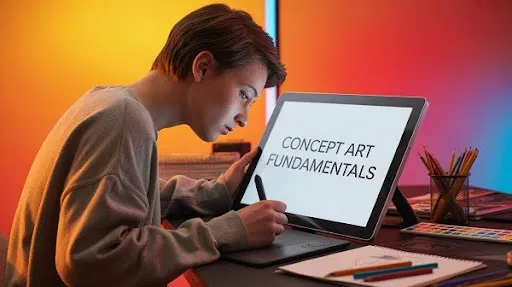
Becoming a concept artist is more than drawing pretty pictures. Here’s a snapshot of the skills concept artists need today:
Art Fundamentals
- Understanding form, anatomy, and perspective
- Mastering light and shadow and how they affect mood
Design Thinking
- Crafting silhouettes that read clearly
- Choosing colors and shapes that express emotion
Speed and Adaptability
- Delivering quick iterations
- Pivoting based on feedback
Technical Tools
- Knowing a digital painting app (like Photoshop or Procreate)
- Familiarity with tools that help with perspective, like Blender or PureRef
Beyond tools, it’s your ability to blend creativity with clarity that sets you apart.
What Are the Main Elements of Concept Art?
Curious about what are the main elements of concept art? Here’s what a solid piece includes:
- A strong silhouette—you should recognize it at a glance
- Clear shape language—does it feel soft, sharp, friendly, menacing?
- A mood-supported color palette
- Well-thought-out lighting and value contrast
- Suggested texture—so viewers sense what it might feel like
Good concept art doesn’t need to be finished for the idea to land.
Styles That Define Concept Art
Concept art wears different hats depending on where it’s used:
- Stylized: great for animation or projects with emotional or fantasy tones; bold colors or playful proportions speak to specific moods.
- Photorealistic: common in big-budget games and visuals-heavy films; everything feels tangible, tactile.
Artists often start loose—with doodles or silhouettes—and get sharper over time, based on feedback. Being flexible in style makes you that much more valuable.
Popular Tools & Software in 2025
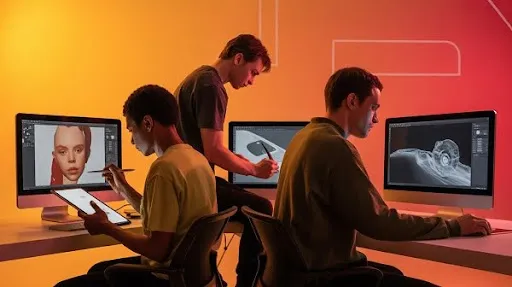
Here’s what most concept artists create illustrations with these days:
- Photoshop: still the go-to for painting and editing
- Procreate: ideal for sketching on tablets
- Clip Studio Paint: great for dynamic lines and character concepts
- Blender + ZBrush: for creating quick sketch models to paint over
- PureRef: keeps your reference images handy and tidy
Pick what fits your budget and workflow—mastery matters more than variety.
Workflow for Creating Concept Art
Here’s a simple version of how the workflow for creating concept art usually goes:
- Briefing: Get an idea of what the project needs and why.
- Research: Dig into references and ideas that spark your design.
- Thumbnail Sketches: Explore shapes and ideas fast, on paper or digitally.
- Feedback Loop: Share early drafts, collect feedback, improve.
- Refinement: Move to a more defined version with proper details.
- Polish: Add mood, lighting, color clarity—make it shine.
- Deliver: Hand off to the next person in the chain (like 3D or animation teams).
Almost every successful design evolves multiple times before becoming “the one.”
Secrets of Concept Art Pros
Curious about little-known truths—the secrets of concept art?
- Your first idea often won’t stick—keep sketching beyond your gut reaction.
- Short on detail? Not a problem. Rough works if it communicates form and feeling.
- Keep evolving your designs—most concepts go through many drafts.
- Looking at Thumbnails over Final Renders—focus on idea clarity, not polish.
Those breakthrough concepts we remember? They were rarely perfect from the start. They grew.
Difference Between Concept Art and Illustration
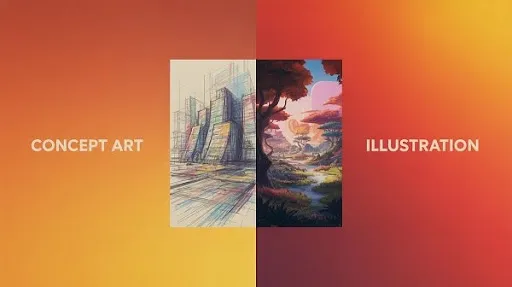
You might see beautiful images and wonder—is that concept art or illustration?
Here’s the distinction:
- Concept art is fluid, exploratory, and primarily internal—used to guide production.
- Illustration is polished, final, and often public-facing—like posters or covers.
Concept art asks, “Does this idea work?” Illustration asks, “How does this idea look?”
Both require artistry—but they serve different creative purposes.
Styles, Comparisons, Tools & Career Paths
Concept Art vs. Production Art
Imagine concept art as the spark of an idea and production art as the polished version of that spark—ready to appear on screen. The difference is in purpose:
- Concept art happens early. It maps possibilities, explores ideas, and gets the whole team excited.
- Production art comes later, with clean lines, consistent colors, and approved details. It ends up in the actual media—inside the game or on set.
The difference between concept art and illustration often lies in intent. Illustration aims to deliver beauty and completeness; concept art aims to deliver clarity and options.
Bridging the Gap: 2D & 3D Fusion
In 2025, many artists don’t stop at brush strokes. They meld digital painting with 3D modeling.
Concept designers, with the help of tools like Blender or ZBrush, can sculpt to some degree their vision. This feels like it will be less effective; however, it ensures that ideas are noticed.
Mapping a Career Path
You don’t need a fancy degree to break into concept art. What matters is clarity, practice, and visibility.
Here’s a roadmap:
- Build a solid foundation with anatomy, color, perspective, and form.
- Stick to one tool at the start—Photoshop or Procreate—master it.
- Curate your portfolio with 8–12 strong pieces showing different concepts.
- Stay visible—share your work consistently on ArtStation, Behance, or Instagram.
- Find your angle—do you lean toward environments, creatures, characters, or props? Specializing can help you stand out.
- Learn constantly through feedback, online classes, and game jams.
A surprising secret? Many studios value consistency and vision more than just raw drawing skill.
Real-World Inspiration
We will remember these art pieces for a long time, due to their beauty, particularly in their incorporation of ideas that can be noticed in the creation.
- Ralph McQuarrie’s Star Wars paintings shaped the iconic look of Darth Vader, the Death Star, and cloud cities. He didn’t just illustrate; he laid the foundation.
- Feng Zhu integrates his art into these simple ideas, expanding on them and pushing imagination, creating the sci-fi that we all love.
- Iain McCaig’s visual storytelling for characters like Padmé Amidala and Voldemort influenced not only aesthetics but casting, wardrobe, and direction.
These artists thought beyond art—they shaped worlds.
Frequently Asked Questions
How does concept art differ from illustration?
One asks if an idea works; the other shows how well it looks. Concept art is exploratory; illustration is polished.
Do I need to know 3D to be a concept artist?
Not necessarily. But knowing 3D tools can speed your workflow and help with perspective—and that’s become valuable in many studios.
What are the main elements of concept art?
Shape clarity, silhouette, color mood, lighting, value contrast, and texture hints—all combined to support readability and storytelling.
How do concept artists stay creative under tight deadlines?
By working fast, using thumbnails, embracing imperfection in early drafts, and iterating rapidly.
Final Word
Here’s where you come in—the visionary with an idea that needs muscle behind it.
If you’re crafting a cinematic world, developing a game, or planning a brand’s visual identity, Prolific Studio’s concept artwork elevates your vision from rough ideas to polished guidelines that creative teams can run with.
We bring clarity to your brief:
- Need character designs with emotional depth? We deliver.
- Imagining abandoned cities or high-tech vehicles? We build it.
- Wondering how your creative universe ties together visually? We map it.
No matter the genre or medium, we ground your project in strong design thinking—fast, flexible, and aligned with your needs.
Reach out to Prolific Studio, one of the best animation studios in Miami. Let’s turn your ideas into visual blueprints—and your concept art into creative execution.
Related articles: