Some animation tricks feel like they belong to a certain era. Stop-motion has that old-school charm, rotoscoping screams “handcrafted,” and then there’s morphing — the trick that never really left. You’ve seen it countless times. A singer’s face turns into another mid–music video.
A logo bends, melts, and suddenly becomes a product shot. A villain in a sci-fi film stretches into liquid metal and reforms as something terrifying. That’s morphing.
What’s wild is how long this effect has been around. Back in the late 80s and early 90s, it was the big Hollywood flex — the kind of moment that made audiences gasp in theaters.
Fast forward to 2025, and the same style of transformation is running in TikTok edits, brand campaigns, and even science explainers on YouTube. Morphing in animation went from million-dollar sequences to something you can pull off with a free app on your phone.
So, what is morphing in animation really? What are its different forms, and why does it still have creative muscle after nearly four decades? Let’s break it down.
[elementor-template id=”13845″]
What Is Morphing in Animation?
Morphing in animation is all about reshaping. Not moving from one place to another — that’s regular motion. Instead, morphing rebuilds an object until it becomes something else entirely. A square flows into a circle. A man’s face drips into a wolf. A sneaker folds into a running athlete.
The process relies on a bridge of in-between images. Each frame tweaks a few pixels, curves, or edges so the first shape gradually leans toward the second. Play those frames at speed, and the shift feels organic. Done right, it’s smooth, hypnotic, and almost too perfect to notice. Done poorly, it’s clunky, with strange distortions that snap you out of the illusion.
That mix of art and math is what makes morphing unique. You need technical accuracy — points lined up, edges mapped correctly — but you also need a designer’s sense of timing and style.
Morphing vs Tweening
This comparison always comes up, and for good reason. On the surface, tweening and morphing sound similar. Both deal with in-betweens. But they’re different jobs.
- Tweening moves an object. A ball bounces, a car glides across a road, a character jumps from one side to the other. The object doesn’t change shape; it just shifts position.
- Morphing reshapes. A ball melts into a bird, or that car bends into a robot. It’s transformation, not movement.
The short rule: tweening = motion. Morphing = transformation. Animators often use both in the same project, but mixing them up leads to misunderstandings, especially for beginners.
The History of Morphing in Animation
It’s easy to think morphing is a modern trick because of how digital it feels. But its roots go back over thirty years.
- 1986 – Flight of the Navigator: This film showed a spaceship changing form while flying. Not the slickest by today’s standards, but back then it was jaw-dropping.
- 1988 – Willow: The famous goat-to-woman scene. A single character morphed through multiple animals before reaching human form. Audiences had never seen anything like it.
- 1991 – Terminator 2: Judgment Day: The liquid-metal T-1000 villain rewrote the rules. It morphed into humans, weapons, and flat surfaces. Even now, many call it the best example of morphing in film history.
- 1992 – Gryphon Software’s MORPH: Hollywood no longer had exclusive rights to the effect. With this software, everyday PC users could make their own transformations.
After those milestones, morphing in animation exploded. Music videos in the 90s used it constantly. Commercials leaned on it for flashy product reveals. By the 2000s, 3D software made the effect faster and more convincing. Today in 2025, even casual creators with mobile apps can make transformations that rival early film effects.
Types of Morphing in Animation
Not all morphs are created equal. Depending on the project, animators use different approaches.
Direct Morphing
The simplest type of morphing in animation. One object slowly becomes another. A square rounds out into a circle. A logo dissolves into text. Easy to set up, but timing is everything — too fast and it looks rushed, too slow and it feels boring.
Morphing at Speed
When things move fast, flaws disappear. A spaceship that’s already zipping across the screen can morph mid-flight, and the eye won’t notice tiny errors. Filmmakers use this trick to hide imperfect transitions.
3D Morphing
In a professional 3D animation studio, instead of flat shapes, animators morph 3D models. Think of a character’s face shifting from neutral to angry to sad. These changes are defined by “morph targets” — preset positions or expressions — and the software fills the space between them. This type of morphing is everywhere in games and films.
Layered Morphing
Instead of one direct change, different elements move separately. A brand logo might break apart, turning into photos, text, and animations, then regroup into a final design. It feels more dynamic because the audience follows multiple mini-morphs at once.
Hybrid Morphing
A mix of methods. A 3D character morphs into a creature while background elements use layered effects. Hybrid approaches are common in big ad campaigns where visuals need variety to stay engaging.
How Morphing Actually Works
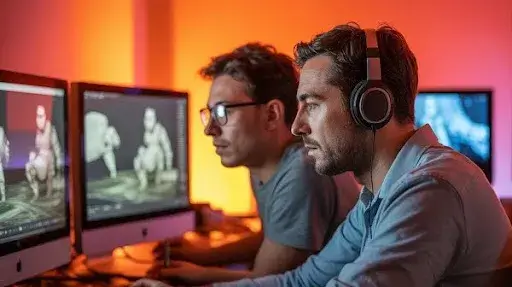
Even though it looks magical, the workflow is methodical.
- Source and Target – Define the starting object and the final object.
- Mapping Features – Mark key points that need to line up. For a face, that might be the eyes, nose, and mouth. For a logo, corners and edges.
- Generating Frames – The software builds the in-betweens. Each frame moves points a little closer until the target is reached.
If those key points are mapped poorly, the morph breaks. Faces stretch strangely, logos twist awkwardly. The difference between an amateur edit and a professional one is often just the precision of this mapping step.
Examples of Morphing in Animation
A few famous examples help anchor the concept:
- Flight of the Navigator (1986): Two spacecraft models digitized and blended into one smooth transformation.
- Willow (1988): The fantasy film Willow (1988) represents the first legitimate instance of digital morphing in a significant motion picture. A sorceress changes into various animals throughout each phase — a visually innovative moment realized with bespoke software by Doug Smyth at Industrial Light & Magic (ILM).
- Terminator 2 (1991): The T-1000 morphing into people, objects, and liquid metal surfaces. Still unmatched for its impact.
- Modern Ads: Food ingredients morph into the final dish. A sneaker flows into a running athlete. A logo folds into the product itself. These aren’t just gimmicks — they make viewers stop scrolling.
Digital Morphing Techniques in 2025
Here’s what makes morphing today so different from its early days: accessibility. What once required expensive rendering power now takes minutes with common software.
- AI-Assisted Morphing: Programs can now detect and align key points automatically. What used to take hours of manual work is reduced to a few clicks.
- Mobile Apps: Tools like CapCut let casual creators build morphing style transitions directly on a phone.
- 3D Software: Programs like Blender, Maya, and Cinema4D provide morph targets and pro-level flexibility.
- After Effects Plugins: Plugins speed up the process of reshaping masks and mapping correspondence points.
With these options, morphing isn’t limited to big studios. From a marketing intern to an indie filmmaker, anyone can add it to their toolkit.
Why Morphing Still Matters in 2025
Morphing hasn’t survived this long just because it looks cool. It has real applications across fields.
- Advertising: Brands love fluid logo-to-product reveals that look futuristic without being distracting.
- Music Videos: Artists rely on surreal transformations to keep viewers hooked.
- Education: Teachers use morphing to show complex processes like geological changes or biological growth.
- Social Media: A quick morph edit pops instantly in a busy feed, which is exactly what creators want.
What started as a flashy trick in Hollywood blockbusters has turned into one of the most adaptable effects in animation. From science explainers to big-budget films, morphing remains a reliable way to capture attention.
How to Create Morphing Animations Without Overthinking It
Understanding morphing is one thing; actually pulling it off is where the fun (and frustration) begins. The good news? In 2025, anyone with a laptop or even a decent phone app can play around with it. Still, if you want your morph to look convincing instead of messy, there are a few basics to keep in mind.
Start with the right objects. A wolf turning into a dog works because our brain can see the logic. A cheeseburger turning into a motorcycle? That’s weird, but it might be funny. Whatever you pick will set the mood of the whole sequence.
Anchor your points. Think of connecting dots between the two shapes. For faces, that means eyes, nose, and mouth. For logos, it’s the corners and curves. Get those anchors wrong, and your smooth transition will suddenly look like a glitchy meme.
Let the software fill in the blanks. Modern programs do the heavy lifting by creating those “in-between” frames. Hit play, and suddenly your still images feel alive. It’s not that different from flipping through a stack of doodles on a notepad.
Refine the motion. A raw morph is rarely ready to publish. You’ll probably have to nudge timing, smooth out awkward transitions, and maybe throw in some liquify effects. This is the difference between “eh, cool trick” and “wow, that actually works.”
Add context. A morph in isolation is just eye candy. Drop it on a music beat, use it to reveal a brand logo, or pair it with a story beat, and it suddenly has purpose. Without context, it’s decoration. With context, it’s storytelling.
Which Tools Are Worth Using in 2025?
We’re spoiled for choice. The right tool depends on what you’re making:
- After Effects – Still the classic go-to for motion graphics. Plugins like RE: Flex save hours.
- Blender – Free, open-source, and brilliant for 3D morph targets.
- Maya – The heavy hitter for film studios; perfect for complex transformations.
- Cinema 4D – Favoured by designers who want both speed and depth.
- CapCut & Mobile Apps – Better than you’d expect for TikTok or Instagram edits.
Rule of thumb: don’t pull out Maya to make a 10-second social clip, and don’t rely on a mobile app if you’re aiming for cinema quality.
Why Animators Keep Returning to Morphing
Some tricks fade out. Morphing doesn’t. Here’s why:
- It grabs attention instantly — humans love watching one thing turn into another.
- It tells a story without words. Growth, change, connection… all in one smooth shift.
- It fits everywhere — from a Nike ad to a classroom explainer.
- It’s flexible. It can be subtle, surreal, dramatic, or playful.
For most animators, morphing isn’t a “special effect” anymore. It’s just part of the toolkit.
Fresh Takes in 2025
Morphing has outgrown its 90s roots. Now you’ll see it in places you might not expect:
- VR worlds where environments melt into each other instead of fading to black.
- Video games where characters shapeshift in real time.
- Healthcare animations showing surgical changes or disease progressions.
- Science explainers visualising tectonic plates or embryo development.
It stays relevant because it keeps finding new roles.
Mistakes Beginners Make (and How to Dodge Them)
- Misaligned points: warped, uncanny results.
- Overusing the effect: audience stops caring.
- Clunky pacing: too fast feels sloppy, too slow feels dragged out.
- No story: morphing just for the sake of it comes off gimmicky.
Most of these iron out with practice, patience, and having a clear “why” before you start.
Frequently Asked Questions
Most famous example?
Still Terminator 2’s liquid-metal T-1000. Nothing beats it.
Morphing vs. tweening?
Tweening moves; morphing reshapes. Simple as that.
Most common type today?
Direct morphing for graphics, 3D morphing for games and films.
Do I need pro software?
Not at all. Apps like CapCut are enough to experiment. But for pro work, stick with After Effects, Blender, or C4D.
Final Words
So, what is morphing in animation in 2025? It’s not just a retro party trick anymore. It’s a storytelling device that works across ads, films, games, VR, and even education. The tech has improved, the tools are more accessible, but the core idea hasn’t changed: one thing smoothly becoming another.
Use it thoughtfully, polish the details, and give it meaning. That’s when morphing stops being decoration — and becomes unforgettable.
If you are looking for an animation studio to do all the heavy lifting for you and make your vision come true, then Prolific Studio is your best option. As one of the best animation studios in Austin, we make sure that all our clients’ animation projects are delivered beyond their expectations.